Explore Delhi During ISSEMCON 2026
The India Gate (formerly known as All India War Memorial) is a war memorial located near the Rajpath (oficially called Kartavya Path) on the eastern edge of the "ceremonial axis" of New Delhi. It stands as a memorial to 74,187 soldiers of the Indian Army who died between 1914 and 1921 in the First World War, in France, Flanders, Mesopotamia, Persia, East Africa, Gallipoli and elsewhere in the Near and the Far East, and the Third Anglo-Afghan War. 13,300 servicemen's names, including some soldiers and oficers from the United Kingdom, are inscribed on the gate. Swaminarayan Akshardham is a Hindu temple and campus in Delhi, India. The temple is close to the border with Noida. Also known as Akshardham Temple or Akshardham Delhi, the complex displays traditional and modern Hindu culture and architecture. Inspired by Yogiji Maharaj and created by Pramukh Swami Maharaj, it was constructed by BAPS.[B 1] It is the world's second-largest BAPS Hindu temple, following Akshardham, New Jersey, in the United States.
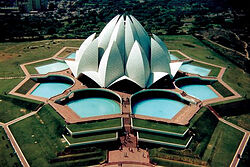
The Lotus Temple is a Baháʼı ́House of Worship in New Delhi, India. It was completed in December 1986. Notable for its lotus-like shape, it has become a prominent attraction in the city. Like all Bahá’ı ́ Houses of Worship, the Lotus Temple is open to all people, regardless of religion or any other qualiication. The building is composed of 27 freestanding marble-clad "petals" arranged in clusters of three to form nine sides with nine doors opening onto a central hall with a height of slightly over 34 metres and a capacity of 1,300 people. The Lotus Temple has won numerous arc
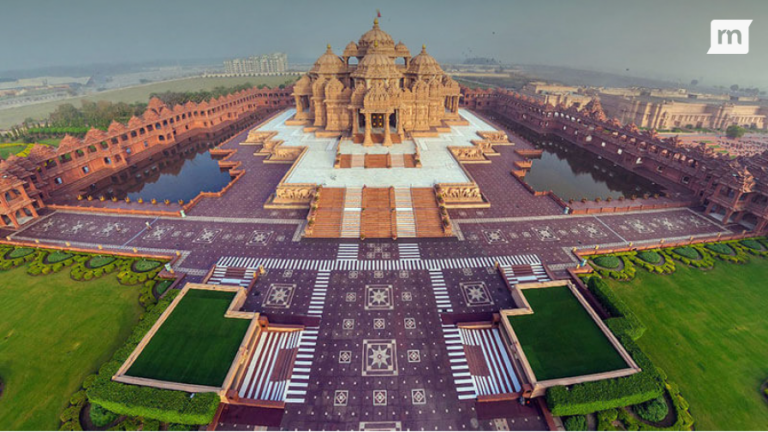
Swaminarayan Akshardham is a Hindu temple and campus in Delhi, India. The temple is close to the border with Noida. Also known as Akshardham Temple or Akshardham Delhi, the complex displays traditional and modern Hindu culture and architecture. Inspired by Yogiji Maharaj and created by Pramukh Swami Maharaj, it was constructed by BAPS.[B 1] It is the world's second-largest BAPS Hindu temple, following Akshardham, New Jersey, in the United States
The Red Fort (Lal Qila in Hindi; Hindi pronunciation: is an historic Mughal fort located in the Old Delhi area of Delhi, India. It served as the main residence of the Mughal emperors. Commissioned by Emperor Shah Jahan on the 12th of May 1639, the fort was constructed following his decision to shift the Mughal capital from Agra to Delhi. Originally adorned in red and white, the fort's design is attributed to Ustad Ahmad Lahori, the architect of the Taj Mahal. The Red Fort is a prominent example of Mughal architecture from Shah Jahan's reign, combining Persian and Indian architectural styles.
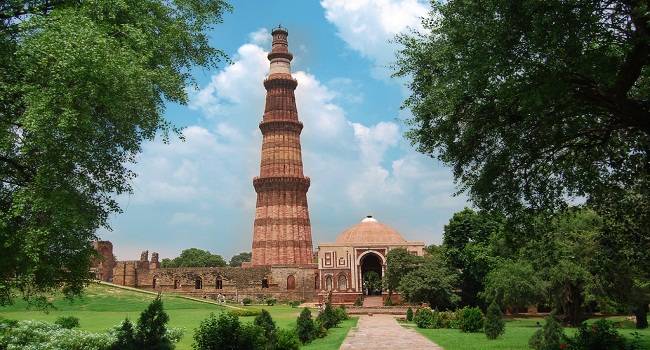
he Qutb Minar, also spelled Qutub Minar and Qutab Minar, is a minaret and victory tower, built during the Delhi sultanate, and comprising the Qutb complex, a UNESCO World Heritage Site in Mehrauli, South Delhi, India. It was mostly built between 1199 and 1220, contains 399 steps, and is one of the most-frequented heritage spots in the city. After defeating Prithviraj Chauhan, the last Hindu ruler of Delhi before the Ghurid conquest of the region, Qutab-ud-din Aibak initiated the construction of the victory tower, but only managed to inish the irst level.
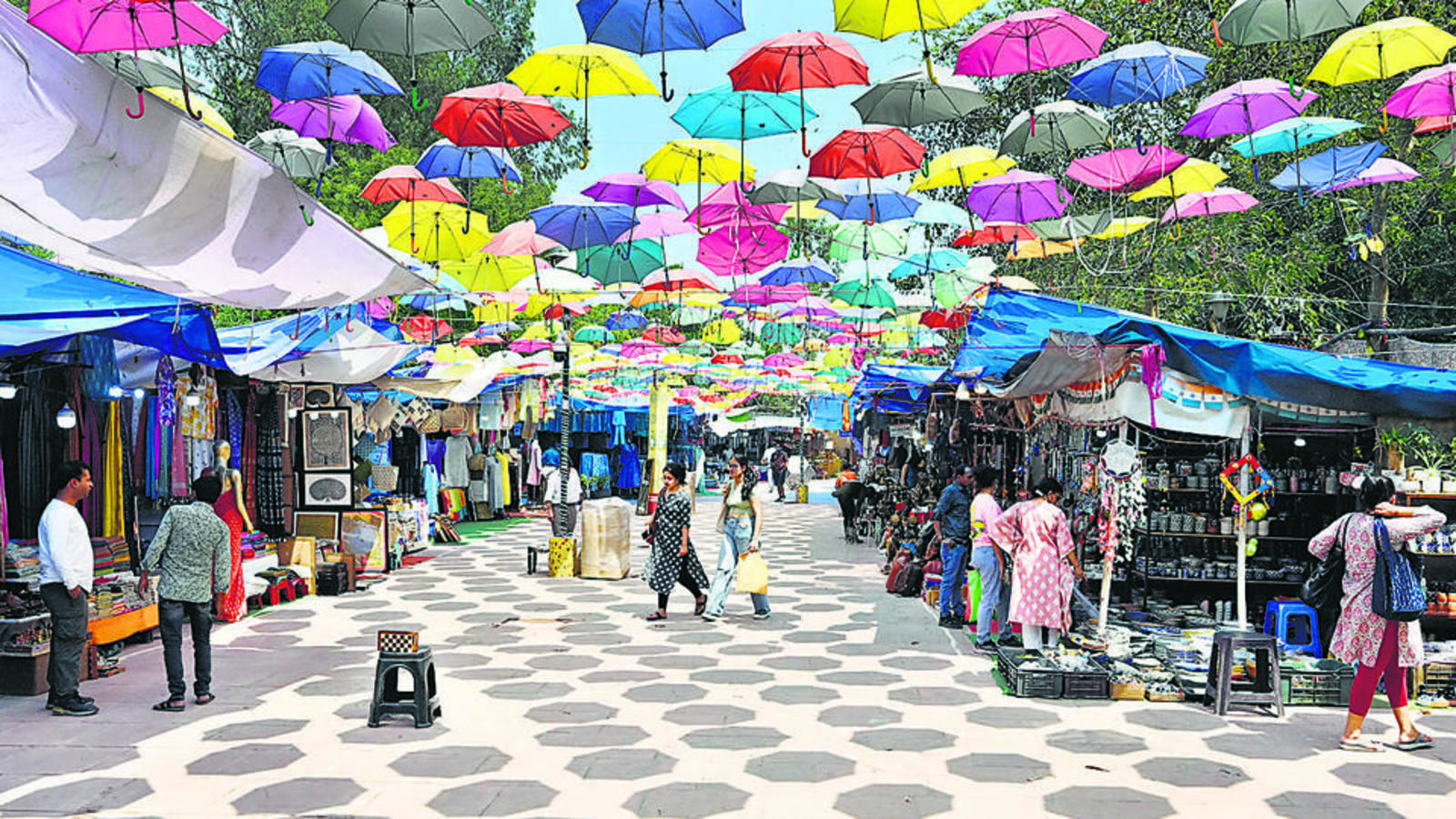
Dilli Haat is a paid-entrance open-air market, food plaza, and craft bazaar located in Delhi. The area is run by Delhi Tourism and Transportation Development Corporation (DTTDC), and unlike the traditional weekly market, the village Haat, Dilli Haat is permanent. It is located in the commercial centres of South Delhi, opposite INA market. The 6 acres of land on which this complex is situated was salvaged as part of a reclamation project and transformed into a plaza. Extensive foundation work, small thatched roof cottages and kiosks give the plaza a village atmosphere.